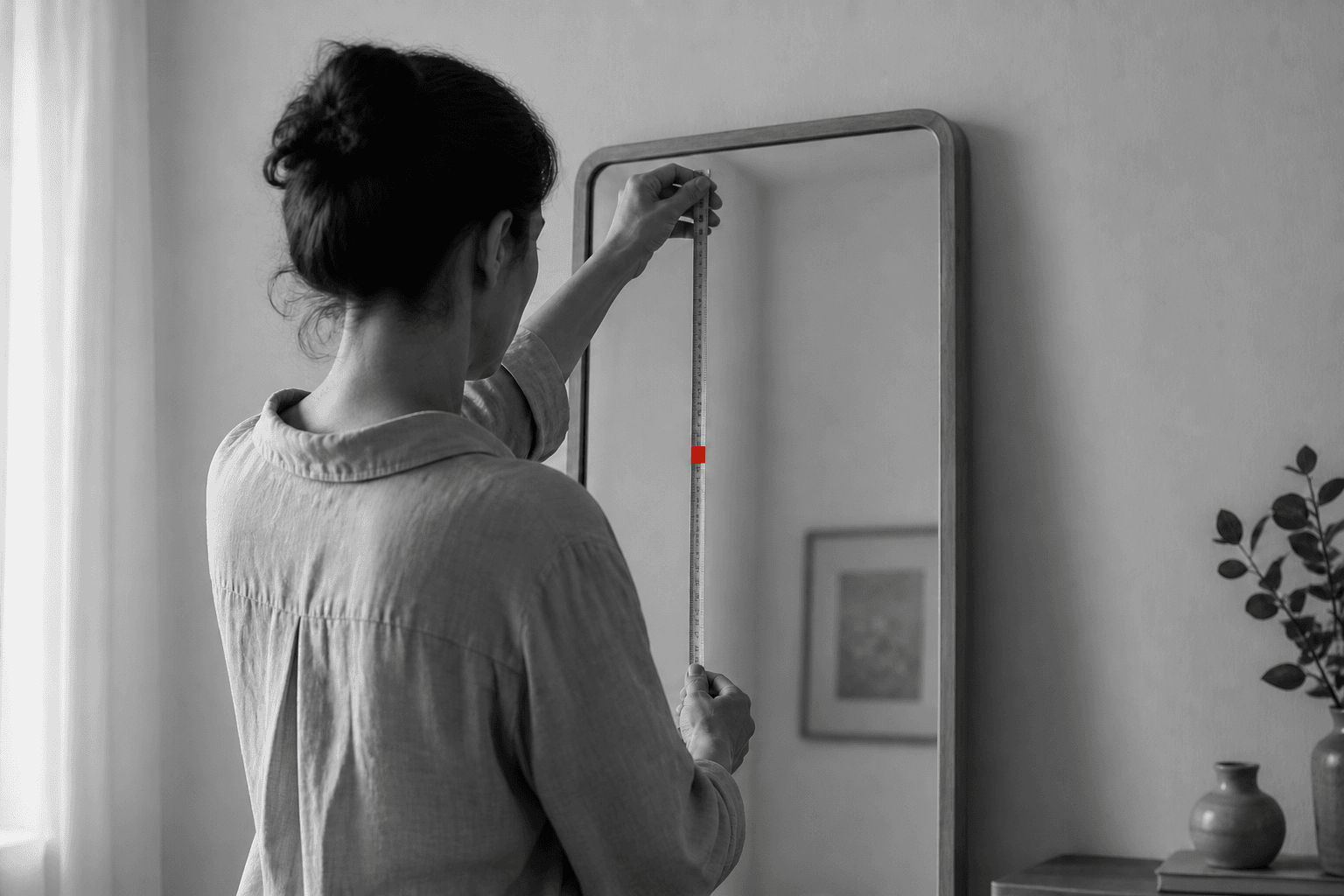
Many of us never sat down and chose the standards we live by.
We see how far the people around us have gone, and we start to feel that we should be there too.
How much should someone earn by this age? Should there be a house by now? A bigger job? A more secure life? Something other people can look at and say, “They’re doing well.”
No one has to say any of this out loud. After seeing the same picture often enough, it is easy to use someone else’s life to measure our own.
And no matter how far we go, it can still feel like we are behind.
Comparison is not the problem
Looking at other people can be useful. Some people show us that more options are possible. Some help us work better. Some make an idea that once felt impossible look real.
The problem is not looking at other people.
The problem starts when someone else’s life becomes a test we are taking.
If they are moving faster, does that mean we are too slow?
If they have more, does that mean we have not made it?
If our choice looks different from everyone else’s, does that mean it is wrong?
After asking questions like these for long enough, many choices stop coming from what we actually want. They start coming from the fear of not looking good enough to someone else.
Take everyone else out of the room for a moment
There is one question worth sitting with.
If no one were watching, no one praised the result, and no one knew what we had achieved, what kind of person would we still want to be?
The answer may have nothing to do with a job title, income, or an impressive-looking life.
It may be someone who keeps their word.
Someone who takes care of their health.
Someone who does honest work.
Someone who makes time for the people who matter.
Someone who can admit a mistake.
Someone who keeps doing meaningful work, even when no one sees it.
None of this makes one person better than another. It simply makes it easier to see whether daily life is moving in a direction that feels right.
Personal standards do not have to be dramatic
A personal standard does not need to sound like a grand statement. It does not need to change an entire life overnight.
It can be as simple as:
- Not taking on more work when health is already being pushed aside
- Following through on a promise even when no one checks
- Spending time with family without looking at a phone every few minutes
- Saying “I don’t know” instead of pretending to understand
- Saving money regularly instead of buying things to look successful
The useful thing about standards like these is that they do not need anyone’s approval. Daily actions make it clear whether the person we want to be is getting closer or further away.
This does not mean shutting people out
Having our own standards does not mean ignoring other people’s feelings or advice.
The people around us still matter, especially when a choice affects family, a partner, a team, or a responsibility we share.
Advice can help us think. It does not have to decide our whole life for us.
We can listen, think again, and even change our mind without handing every choice to someone else.
Break Free can start here
Break Free does not always look like quitting a job, moving to a new city, or leaving everything behind.
Sometimes it starts with letting go of the idea that every choice needs approval and every success only counts when it looks better than someone else’s.
The first step can be one situation and a few honest questions:
- Is this something I truly want, or am I afraid of falling behind?
- If no one saw it, would I still want to do it?
- What would the person I want to be do here?
- What is one small thing I can actually do this week?
Then do one of those things for real.
Confidence does not come from telling ourselves that no one else matters. It grows when we keep a few promises to ourselves and slowly learn that our own choices can be trusted.
Freedom may not begin when every outside voice goes quiet.
It may begin when we know which voices deserve our attention—and which ones should not get to decide an entire life.
In the end, the standard that matters may not be the one that puts us ahead of someone else.
It may be the one that lets us look back and say: this is the person I actually want to be.