One Small Win shows that a start has happened.
Repeating a useful action can do more than make starting easier. It can gradually build a skill.
The work may still be unfinished, but something has changed: one part is clearer, a task is easier, or there is enough experience to try the next step.
The first attempt may require considerable effort.
The next begins to feel familiar.
Eventually, a rhythm starts to form.
But Small Wins do not automatically add up to a Big Win.
Ten unrelated tasks can fill a day without helping the thing that needs to change. Repetition helps when the practice is relevant and there is a chance to notice and correct mistakes.
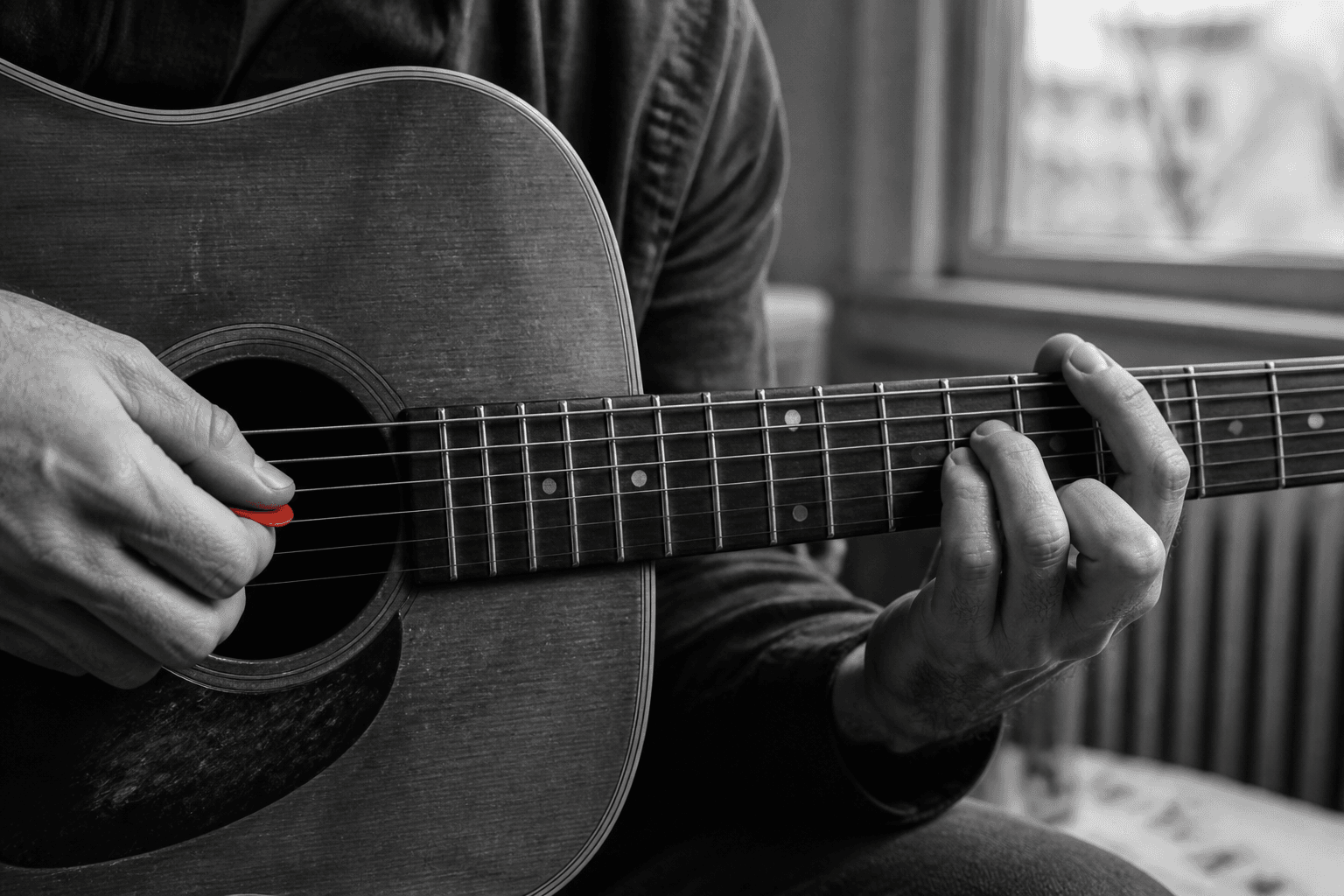
Learning music makes the process visible.
One guitar chord a week may appear too slow to matter. Yet the value is not found in the number of chords alone.
Each practice session leaves something behind. Fingers remember their positions. Pressure on the strings becomes more precise. The ear begins to distinguish a clean sound from an unfinished one. Moving from one chord to another gradually becomes smoother.
Separate chords begin to form a progression.
The progression develops a rhythm.
The rhythm begins to sound like a song.
A song takes practice. Some sessions go well; others reveal a chord or transition that needs more attention.
The same pattern can shape other meaningful changes.
The first attempt shows where to begin.
Practice can make a difficult part easier.
Reviewing what happened shows what needs adjustment.
From a distance, a Big Win can look like a sudden leap.
Up close, progress often includes both practice and changes of plan. Some steps build skill. Others show that a different method or path would work better.
What skill or option is repeated practice creating, and what needs to change?